
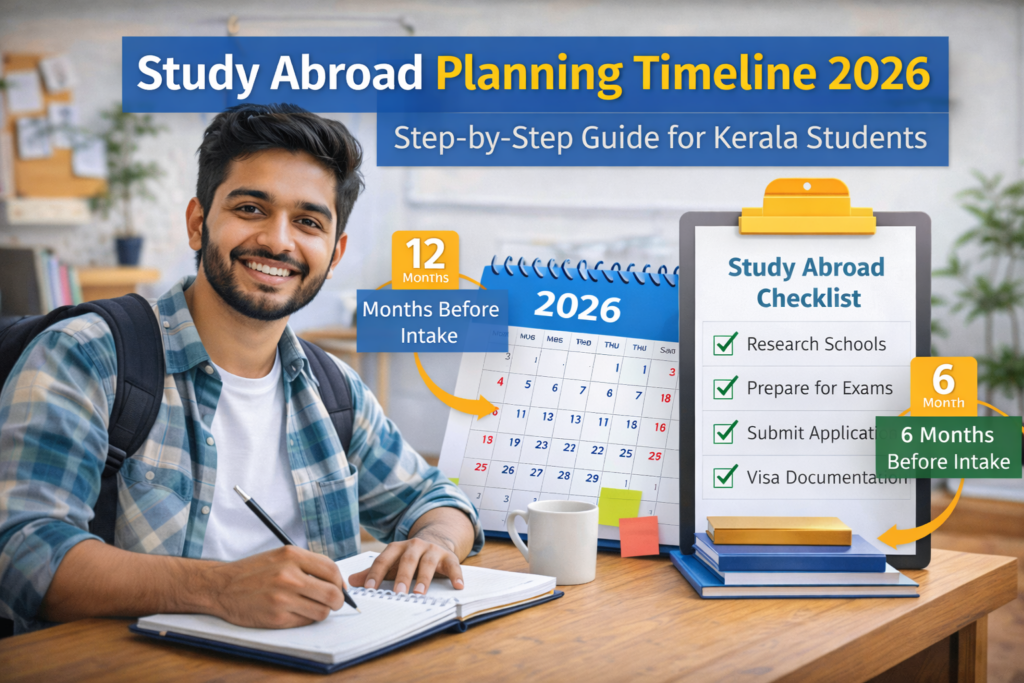
Planning to study abroad is exciting, but without a structured roadmap, it can quickly become overwhelming. Many students lose valuable time because they start late, miss scholarship deadlines, or delay visa documentation. A clear study abroad planning timeline for 2026 can prevent unnecessary stress and significantly improve admission and visa success rates.
For students from Kerala targeting 2026 intakes, early preparation is not optional – it is essential. Universities worldwide now process thousands of applications per intake, and visa scrutiny has become stricter. Starting at the right time gives you flexibility, confidence, and better outcomes.
This detailed month-by-month guide will help you understand when to take each step.
12–10 Months Before Intake: Research and Direction
If you are planning for Fall 2026 (September intake), preparation should ideally begin by August or September 2025. This early phase is about clarity and research.
At this stage, students should identify career goals and shortlist countries based on long-term objectives. It is important to compare tuition fees, living expenses, post-study work policies, and immigration pathways. Instead of following friends or trends, decisions must be aligned with personal career plans.
University shortlisting should focus on course curriculum, internship opportunities, industry connections, and graduate employability rates. Checking eligibility criteria early prevents last-minute surprises.
This phase lays the foundation for the entire journey.
9–8 Months Before Intake: Test Preparation and Documentation
Once countries and universities are shortlisted, the next critical step is preparing for English proficiency exams such as IELTS or PTE. Some countries may also require standardized tests depending on the course.
Students should begin drafting important documents such as Statements of Purpose (SOP) and preparing Letters of Recommendation (LOR). A strong SOP can significantly influence admission decisions. Rather than generic writing, it should clearly explain academic background, career aspirations, and reasons for choosing the specific program.
Simultaneously, students should begin collecting academic transcripts and certificates. Keeping documents ready avoids unnecessary delays when applications open.
Early preparation during this period increases scholarship eligibility as well.
7–6 Months Before Intake: University Applications
This phase is crucial. Most universities open application windows during this period, and applying early increases acceptance chances.
Students should submit complete applications with accurate documentation. Double-checking details before submission reduces the risk of rejection due to minor errors.
If you are applying for scholarships, this is the right time to submit funding applications as well. Many scholarships operate on priority deadlines, and late applications may not receive full consideration.
Prompt communication with universities and timely response to email queries also reflects seriousness and professionalism.
5–4 Months Before Intake: Offer Letters and Financial Planning
By this time, students begin receiving admission decisions. Once an offer letter arrives, it is important to evaluate the conditions carefully before accepting.
Financial planning becomes critical during this stage. Students must arrange tuition deposits, calculate total estimated expenses, and prepare proof of funds for visa applications. Depending on the country, financial documentation requirements may vary.
Opening a student bank account, arranging education loans if required, and ensuring fund consistency are important steps that strengthen visa applications.
Proper financial organization during this phase reduces last-minute panic.
3–2 Months Before Intake: Visa Application Process
The visa application stage demands precision. Students must carefully review country-specific visa requirements and prepare documentation accordingly.
Typical documents required for a student visa include:
Valid passport
Offer letter
Proof of funds
English proficiency test results
Academic transcripts
Medical insurance
Statement of Purpose (if required for visa)
Accuracy is extremely important. Even minor inconsistencies can lead to delays or rejection.
Students should apply as soon as visa applications open to allow sufficient processing time. Most student visas take between four to eight weeks, depending on the destination and application volume.
1 Month Before Departure: Final Preparations
As departure approaches, practical arrangements become the focus. Students should finalize accommodation, either through university housing or private rentals. It is advisable to confirm lease agreements before arrival.
Booking flights early often helps reduce travel costs. Students must also arrange foreign exchange, international debit cards, and travel insurance.
Researching public transport systems, climate conditions, and basic local regulations can help students adjust smoothly after arrival.
This final month is also emotionally important, as students prepare mentally for living independently in a new country.
Why Early Planning Makes a Difference
Many students ask, “When should I apply for Fall 2026?” The safest answer is at least 10 to 12 months before intake. Starting early provides three major advantages.
First, it improves university acceptance chances because early applicants face less competition. Second, it increases scholarship eligibility since many funding programs operate on early deadlines. Third, it reduces visa-related stress, giving students enough time to respond if additional documents are requested.
Procrastination often leads to rushed decisions, limited university options, and higher financial stress.
Common Mistakes to Avoid
One common mistake is underestimating documentation preparation time. Gathering transcripts, financial records, and recommendation letters often takes longer than expected.
Another frequent issue is ignoring visa financial consistency requirements. Sudden large bank deposits without explanation may raise questions during visa processing.
Students also sometimes delay English test preparation, resulting in lower scores that restrict university options.
Following a structured study abroad checklist for Kerala students ensures nothing is missed.
Final Thoughts
A well-organized study abroad planning timeline for 2026 transforms a complex process into manageable steps. From research and test preparation to visa filing and final travel arrangements, each stage requires attention and timely action.
Students who begin early gain better university options, stronger scholarship opportunities, and smoother visa approvals. Careful planning not only increases success rates but also builds confidence throughout the journey.
Studying abroad is a life-changing opportunity. With the right timeline and preparation strategy, Kerala students can approach 2026 admissions with clarity and confidence.