
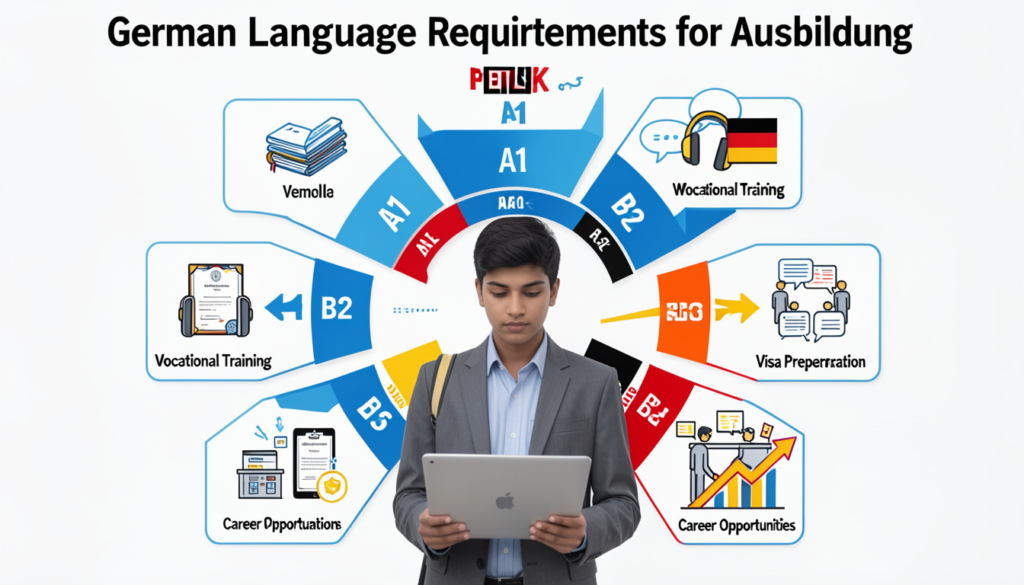
Germany has become a popular destination for students seeking practical career-oriented education through vocational training programs. While many students focus on eligibility criteria, visa procedures, and career opportunities, one important requirement is often underestimated: German language proficiency. Understanding the German language requirements for Ausbildung is essential because communication plays a significant role in both vocational education and workplace training.
Unlike many international university programs that offer English-taught courses, most Ausbildung programs are conducted primarily in German. Students are expected to attend vocational classes, communicate with instructors, interact with colleagues, and engage with customers or patients in professional settings. Because of this, having a strong foundation in the German language greatly improves both admission chances and overall success during training.
For Indian students planning to pursue vocational education in Germany, language preparation should be considered an important part of the application journey rather than a last-minute requirement.
Understanding the Role of Language in Vocational Training
Ausbildung combines classroom-based learning with practical workplace experience. Students spend part of their time studying vocational subjects and the remaining time working within companies. This dual-learning approach requires regular communication in professional environments.
Whether a student is training in healthcare, hospitality, logistics, retail, or technical services, daily communication forms a major part of the learning process. Trainees need to understand instructions, participate in discussions, complete reports, and interact with supervisors effectively.
The German language for vocational training is therefore not limited to basic conversation. Students must be comfortable understanding workplace terminology, professional instructions, and practical training requirements. Language proficiency helps trainees adapt more quickly to both educational and professional environments.
What German Level Is Required for Ausbildung?
One of the most common questions among applicants concerns the German level for Ausbildung programs. While specific requirements may vary depending on the industry, employer, and vocational institution, many programs expect students to demonstrate intermediate-level German skills before admission.
Employers and training institutions generally want assurance that applicants can understand workplace communication and actively participate in vocational classes. Since Ausbildung focuses heavily on practical learning, communication challenges can directly affect performance during training.
Healthcare-related programs often have stricter language expectations because trainees interact with patients, healthcare teams, and support staff. Hospitality and customer-facing roles may also require stronger communication abilities due to regular public interaction.
Students should always verify the language requirements specified by their chosen training provider before applying.
Why Language Skills Improve Admission Chances
Meeting the minimum language requirement is important, but stronger communication abilities can provide additional advantages during the application process. Employers often receive applications from multiple candidates and may prefer students who demonstrate confidence in spoken and written German.
Language proficiency reflects commitment, preparation, and willingness to integrate into German society and workplaces. Students who invest time in language learning often adapt more smoothly to vocational training environments and daily life in Germany.
Employers may view language skills as a sign that applicants are serious about completing the program successfully and contributing effectively within the workplace.
Challenges Faced by International Students
Many Indian students begin their Ausbildung journey with limited exposure to the German language. Learning a completely new language can feel challenging, especially when students must simultaneously prepare academic documents, visa applications, and career plans.
Common challenges include understanding pronunciation, grammar structures, and workplace vocabulary. Students may also feel nervous about speaking German during interviews or practical training sessions.
However, these challenges can be overcome through consistent practice and gradual learning. Language acquisition takes time, and students who start preparation early generally experience a smoother transition when they arrive in Germany.
Patience and regular practice are often more important than attempting to learn everything quickly.
How to Learn German for Ausbildung Successfully
Students who want to learn German for Ausbildung should begin preparation as early as possible. Developing language skills gradually allows more time to improve listening, reading, writing, and speaking abilities.
Structured language courses can provide a strong foundation by introducing grammar rules, vocabulary, and conversation practice. In addition to formal learning, students can strengthen their skills through everyday exposure to German-language content.
Listening to German podcasts, watching educational videos, reading simple articles, and practicing conversations regularly can improve confidence over time. Consistent exposure helps students become more comfortable with pronunciation and sentence structure.
Language learning should focus not only on examination preparation but also on practical communication skills needed for workplace environments.
Importance of Workplace Communication Skills
Vocational training involves active participation in professional settings. Trainees communicate with supervisors, colleagues, customers, patients, and instructors throughout the program. Effective communication helps students understand expectations and perform tasks accurately.
Workplace language skills also contribute to professional relationships and teamwork. Students who communicate confidently often integrate more easily into company environments and develop stronger connections with colleagues.
In many industries, communication is directly linked to productivity, safety, and service quality. Building strong language skills therefore benefits both educational progress and future employment opportunities.
Language Requirements and Visa Preparation
Language proficiency may also influence visa preparation and overall readiness for living abroad. Students who understand German often find it easier to manage everyday activities such as transportation, accommodation arrangements, shopping, and administrative procedures.
Being able to communicate independently reduces stress and improves confidence during the transition to a new country. While language skills alone do not determine visa approval, they demonstrate preparedness for studying and working in Germany.
Students who prepare thoroughly often adapt more successfully to both academic and professional responsibilities after arrival.
Career Benefits of Learning German
The advantages of learning German extend beyond Ausbildung itself. Strong communication skills can improve employment prospects, career advancement opportunities, and workplace performance throughout a professional career.
Employers often value candidates who communicate effectively and can work independently within German-speaking environments. Language proficiency may also create opportunities for promotion, specialized roles, and long-term employment.
For students considering future career growth in Germany, investing time in language development can provide lasting professional benefits beyond the training period.
Final Thoughts
Understanding the German language requirements for Ausbildung is an essential step for students planning vocational education in Germany. Language proficiency influences admissions, workplace performance, daily life, and long-term career opportunities.
Students who begin preparation early and focus on practical communication skills often find it easier to adapt to vocational training environments. While learning German requires dedication and consistency, the benefits extend far beyond the classroom.
By building strong language skills before starting training, Indian students can improve their confidence, enhance admission prospects, and create a solid foundation for professional success in Germany.