
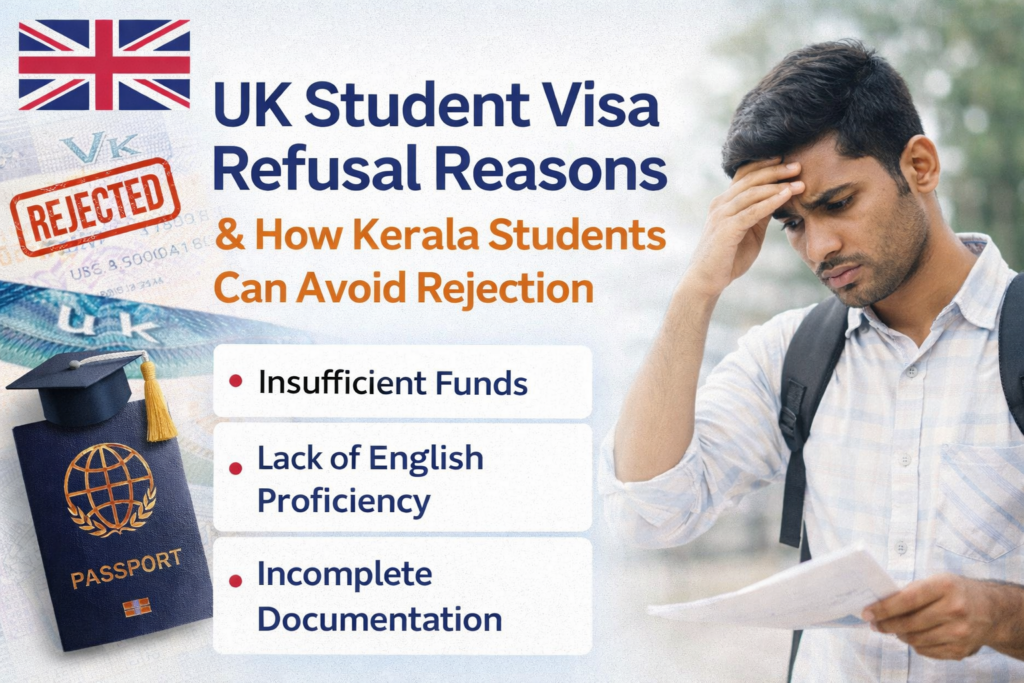
The United Kingdom continues to be one of the most preferred study destinations for students from Kerala. High academic standards, global recognition, part-time work opportunities, and post-study options make the UK highly attractive. However, despite strong academic profiles, many applicants face visa refusal every year. Understanding the UK student visa rejection reasons for Kerala students is essential before applying in 2026. Most rejections are not due to lack of eligibility, but because of avoidable errors, weak documentation, or unclear explanations. This guide explains the key reasons behind UK student visa refusals and how Kerala students can take the right steps to avoid rejection.
Lack of Proper Financial Evidence
One of the most common reasons for UK student visa rejection is insufficient or incorrect financial proof. UK visa officers must be convinced that the student can comfortably manage tuition fees and living expenses without relying on illegal work or external support.
Many Kerala students face rejection because their bank balance does not meet the required amount, funds are deposited suddenly, or financial documents are unclear. In some cases, sponsorship details are not properly explained, which raises doubts about fund availability.
To avoid this issue, students must ensure that the required amount is maintained for the prescribed period and that all financial documents are clear, verifiable, and consistent. Funds should come from acceptable sources, and last-minute deposits should be avoided. A well-prepared financial file plays a major role in visa approval.
Weak or Generic Statement of Purpose (SOP)
The Statement of Purpose is a crucial document that helps visa officers understand whether the applicant is a genuine student. Unfortunately, many visa rejections occur because SOPs are copied, poorly structured, or fail to explain academic and career goals clearly.
Kerala students sometimes submit SOPs that focus only on emotional reasons for studying abroad without providing logical academic justification. Others include unrealistic career plans or vague explanations, which reduces credibility.
A strong SOP should clearly explain why the student chose the UK, how the selected course aligns with previous education, and how it supports future career goals. Writing in simple, honest language and presenting a clear study plan significantly reduces rejection risk.
Unexplained Academic Gaps
Academic gaps are common among students from Kerala due to exam repetitions, career exploration, work experience, or personal reasons. However, visa officers become concerned when these gaps are not properly explained.
If a student has taken time off between studies and fails to justify it with valid reasons or documentation, it can create doubt about their commitment to education. This often leads to rejection under the “genuine student” assessment.
Students should clearly explain academic gaps in their SOP and support them with relevant documents such as work experience letters, training certificates, or skill development records. When explained properly, gaps are usually accepted without issue.
Course Selection That Lacks Academic Relevance
Choosing a course that does not align with previous studies or work experience is another major UK student visa rejection reason for Kerala students. Visa officers assess whether the course makes logical sense in the student’s academic and career journey.
When a student selects a course purely for visa approval or migration benefits without academic relevance, it raises suspicion. Sudden shifts without explanation often lead to refusal.
Kerala students should select courses that naturally build on their academic background or professional experience. If a course change is necessary, it must be well justified with clear reasoning in the SOP.
Errors in CAS (Confirmation of Acceptance for Studies)
The CAS is an official document issued by the university and plays a critical role in the visa application. Even small mistakes in CAS details can result in visa rejection.
Errors such as incorrect personal information, mismatch in course details, or incorrect fee payments can create serious problems. In some cases, students apply for visas without thoroughly checking CAS accuracy.
Before submitting the visa application, students must carefully verify all CAS details and ensure that tuition payments and personal information match exactly with other documents.
English Language Requirement Issues
English proficiency is a mandatory requirement for UK student visas. Rejections often occur when students submit expired test results, insufficient scores, or unapproved certificates.
Some students also misunderstand university requirements and submit results that do not meet visa-level standards. This creates confusion and leads to refusal.
Kerala students should ensure that their English test results are valid, meet both university and visa requirements, and are submitted in the correct format. Proper planning of language tests avoids last-minute issues.
Inconsistencies Across Documents
Consistency is a key factor in visa decision-making. When details differ across documents, visa officers may doubt the authenticity of the application.
Common inconsistencies include mismatched sponsor names, conflicting timelines, or different course details mentioned in SOP and CAS. Even minor discrepancies can impact the final decision.
To avoid this, students should thoroughly review their entire application before submission and ensure that all information remains uniform across documents.
Poor Performance in Credibility Interviews
Some applicants are required to attend a credibility interview as part of the UK student visa process. Rejection occurs when students provide unclear answers, appear unprepared, or fail to explain their study plans convincingly.
Visa officers are not testing language fluency but rather the student’s understanding of their course, university, and future goals. Memorized answers or confusion during the interview can harm the application.
Proper preparation, honesty, and confidence are essential to perform well in the interview.
Impact of Previous Visa Refusals
Previous visa refusals, whether from the UK or other countries, can affect new applications if not handled correctly. Failing to disclose past refusals or giving unclear explanations often leads to rejection.
Students should always declare previous refusals honestly and explain how the issues were resolved. Transparency and improved documentation help rebuild credibility.
Why Professional Guidance Matters
Many UK student visa rejection reasons for Kerala students arise due to lack of expert guidance. Professional support helps students select the right course, prepare strong documentation, and avoid costly mistakes.
With proper guidance, students can submit well-structured applications that meet all UK visa requirements and significantly improve approval chances.
Conclusion
UK student visa rejection is not uncommon, but it is often preventable. By understanding the key UK student visa rejection reasons for Kerala students, applicants can prepare smarter, avoid errors, and approach the process with confidence.
With careful planning, clear documentation, and the right guidance, Kerala students can successfully secure their UK student visa in 2026 and move one step closer to achieving their academic dreams.
.