
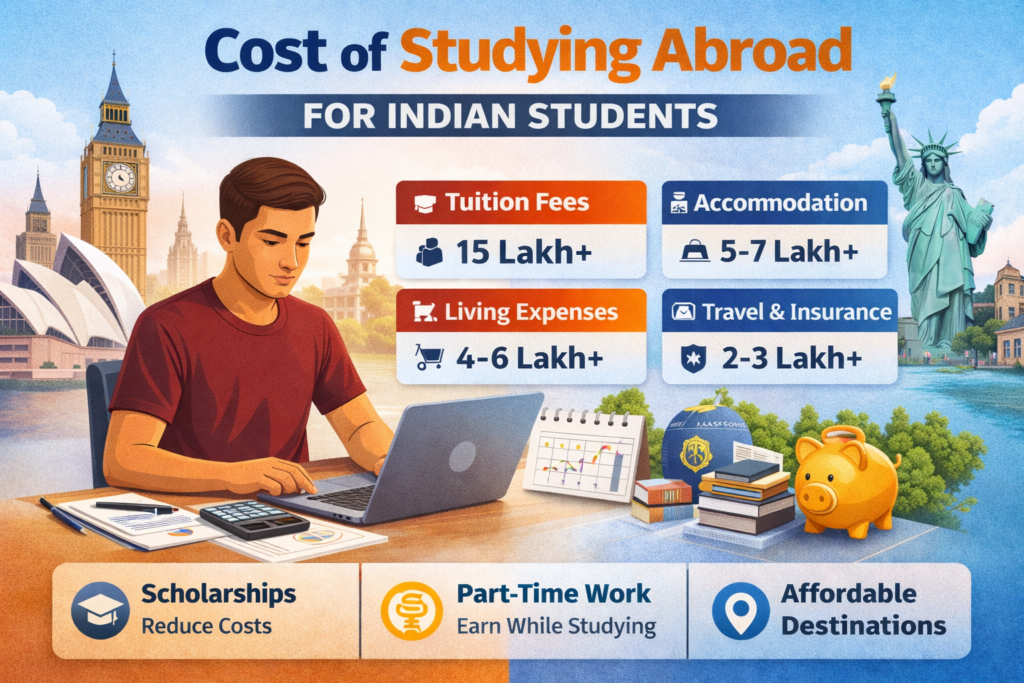
Studying abroad is a dream for many students who want to gain international exposure, access high-quality education, and build a global career. However, before starting the application process, it is important to understand the financial commitment involved. The cost of studying abroad for Indian students can vary significantly depending on the destination country, university, course type, and lifestyle choices. Proper financial planning helps students and families prepare for these expenses and make informed decisions about international education.
Tuition Fees in International Universities
One of the biggest components of study abroad expenses is tuition fees. Universities in different countries charge varying amounts depending on the program and institution. For example, undergraduate and postgraduate programs in countries such as the United Kingdom, Australia, and the United States often have higher tuition fees compared to some European destinations. Technical programs, business courses, and specialized professional degrees may also have higher costs due to the advanced facilities and resources required. Students should carefully review tuition structures before applying to universities to ensure the program fits their financial capacity.
Accommodation Costs for International Students
In addition to tuition fees, students must also consider the cost of accommodation. Housing expenses depend largely on the city and type of accommodation chosen. Some students prefer university dormitories because they are convenient and provide a supportive environment for international students. Others choose shared apartments or private rentals, which may offer more independence but can also be more expensive in certain cities. Major metropolitan areas typically have higher housing costs compared to smaller university towns.
Managing Daily Living Expenses Abroad
Daily living expenses are another important aspect of the overall budget. These costs include food, transportation, utilities, study materials, and personal expenses. Living costs vary widely between countries and even between cities within the same country. Students studying in large international cities may need to budget more for transportation and groceries compared to those living in smaller towns. Careful budgeting and responsible spending can help students manage these expenses effectively throughout their academic journey.
Travel Costs and Insurance Requirements
Travel Costs and Insurance Requirements
Travel expenses should also be included when calculating the cost of studying abroad for Indian students. International flights, visa application fees, and travel insurance can add a significant amount to the initial investment required for overseas education. Students should also consider the possibility of visiting home during holidays, which may involve additional airfare costs depending on the distance and travel season.
Health insurance is another mandatory expense in many countries. International students are often required to purchase health coverage as part of their visa or university enrollment requirements. Health insurance ensures that students receive medical care without facing extremely high treatment costs in foreign countries. The price of health insurance varies depending on the destination and coverage level, but it is an important factor that should not be overlooked during budget planning.
Ways to Reduce Study Abroad Expenses
Despite these expenses, there are several ways to reduce the financial burden of studying abroad. Scholarships are one of the most effective methods for lowering education costs. Many universities and governments offer scholarships specifically designed for international students. These financial awards can cover part of the tuition fees or even provide full funding in some cases. Students with strong academic records and extracurricular achievements often have higher chances of receiving scholarships.
Part-time work opportunities also help students manage study abroad expenses. Many countries allow international students to work a limited number of hours per week during academic sessions. This allows students to earn additional income to cover daily expenses such as food, transportation, and personal needs. While part-time work cannot usually cover tuition fees entirely, it can significantly reduce the overall cost of living abroad.
Choosing Affordable Study Abroad Destinations
Choosing Affordable Study Abroad Destinations
Another strategy for managing expenses is selecting affordable study destinations. Some countries offer lower tuition fees and living costs compared to traditional study abroad locations. European nations and certain emerging education destinations provide high-quality education while maintaining relatively reasonable costs for international students. Choosing such destinations can make international education more accessible without compromising academic quality.
Importance of Financial Planning for Study Abroad
Proper budget planning for study abroad should also include contingency funds for unexpected expenses. Currency exchange rates, changes in living costs, or unforeseen personal needs can affect a student’s financial situation while studying overseas. Maintaining a small financial buffer helps ensure that students can manage unexpected challenges without interrupting their academic progress.
Ultimately, understanding the cost of studying abroad for Indian students is a crucial step in preparing for international education. By evaluating tuition fees, accommodation, living expenses, travel costs, and insurance requirements, students can build a realistic financial plan for their studies.