
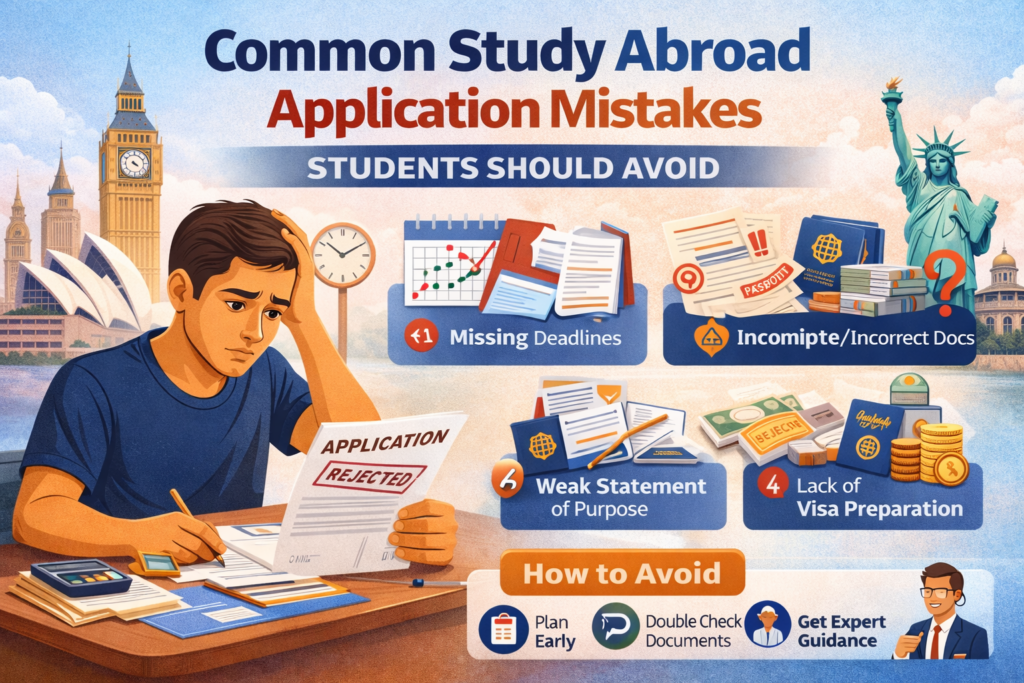
Applying to universities abroad is an exciting milestone for many students who want to pursue international education and expand their career opportunities. However, the application process can be complex and requires careful preparation. Many students unintentionally make errors during the application journey that can affect admission decisions or even lead to visa rejection. Understanding common study abroad application mistakes can help students avoid unnecessary delays and increase their chances of successfully securing admission and a student visa.
Starting the Application Process Too Late
One of the most common study abroad application mistakes students make is starting the process too late. International admissions involve multiple steps, including researching universities, preparing documents, taking language proficiency tests, and applying for visas. Each of these stages requires time, and last-minute applications often result in rushed decisions and incomplete documentation. Students who begin planning early have more time to compare universities, prepare stronger applications, and meet deadlines comfortably.
Choosing Universities Without Proper Research
Another frequent mistake is choosing universities without proper research. Some students apply to institutions simply because they are popular or recommended by friends. However, selecting a university should be based on several factors such as course curriculum, faculty expertise, internship opportunities, and career outcomes. A program that aligns with the student’s academic interests and career goals is far more valuable than choosing a university solely for its reputation.
Submitting Incomplete or Incorrect Documents
Incomplete or incorrect documentation is also a major issue in the study abroad application process. Universities require several important documents, including academic transcripts, letters of recommendation, language test scores, and a statement of purpose. Even a small error in these documents can create complications. Students should double-check every file before submission and ensure that all information is accurate and up to date. Paying close attention to documentation requirements helps avoid unnecessary application delays.
Writing a Weak Statement of Purpose
A poorly written statement of purpose is another common mistake. The statement of purpose plays a crucial role in demonstrating the student’s motivation, academic background, and career aspirations. Many students make the mistake of writing generic statements that do not clearly explain their goals or reasons for choosing a particular course. Admissions committees prefer applications that reflect genuine interest and thoughtful planning. A strong statement of purpose should highlight personal experiences, academic achievements, and how the chosen program supports long-term career objectives.
Ignoring English Language Test Preparation
Many students also underestimate the importance of English language proficiency tests. Exams such as IELTS or PTE are mandatory for admission to most international universities. Some applicants assume that their general English skills are sufficient and delay preparation until the last moment. However, achieving the required score often requires consistent practice and familiarity with the exam format. Preparing in advance can significantly improve performance and reduce stress during the application timeline.
Poor Financial Planning for Studying Abroad
Financial planning is another area where mistakes frequently occur. Studying abroad involves several expenses including tuition fees, accommodation, travel costs, and living expenses. Students sometimes apply to universities without fully understanding the financial requirements or the proof of funds needed for visa applications. Proper budgeting and exploring scholarships can help manage study abroad expenses more effectively. Financial preparedness also demonstrates credibility during the visa application process.
Understanding Visa Documentation Requirements
Another important factor is understanding visa requirements. One of the most serious study abroad application process mistakes is submitting incomplete visa documentation or failing to meet financial requirements. Immigration authorities carefully review student visa applications to ensure that applicants are genuine students with clear academic intentions. Providing accurate financial statements, admission letters, and supporting documents is essential for avoiding visa rejection.
Missing Important Application Deadlines
Some students also make the mistake of ignoring deadlines. University admission cycles are often competitive, and missing an application deadline can mean waiting several months for the next intake. Similarly, visa appointments and document verification processes may take time, making early preparation extremely important. Keeping track of important dates helps ensure that each stage of the application process is completed smoothly.
Not Seeking Professional Guidance
Another overlooked aspect is failing to seek proper guidance when needed. The study abroad journey includes several complex steps such as course selection, application preparation, visa documentation, and travel planning. Students who attempt to manage everything without reliable information may encounter avoidable challenges. Seeking advice from experienced education consultants or trusted sources can help students navigate the process more effectively.
Preparing for Student Visa Interviews
Final Thoughts on Avoiding Study Abroad Application Mistakes
Ultimately, avoiding study abroad application mistakes requires careful planning, accurate documentation, and thorough research. Students who begin the process early, understand admission requirements, and prepare their applications thoughtfully are more likely to achieve successful outcomes. The study abroad journey involves several important steps, but with the right preparation and attention to detail, students can navigate the process smoothly and confidently.
By learning from common mistakes and following a well-structured application strategy, students can significantly improve their chances of gaining admission to their desired universities and starting a rewarding international academic journey.