
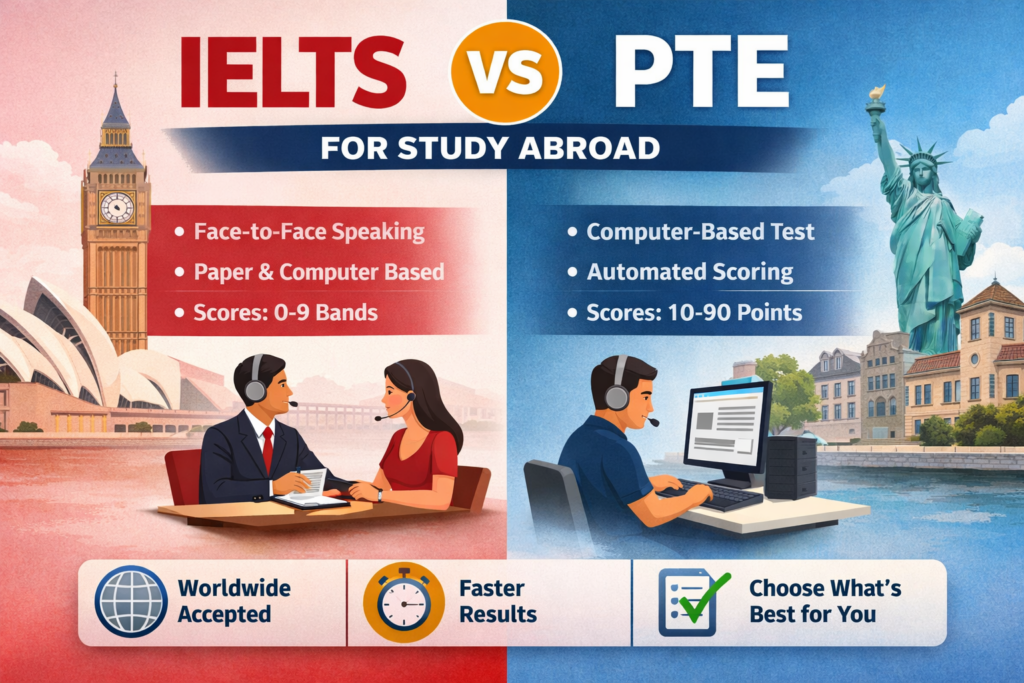
For students planning to pursue higher education abroad, demonstrating English language proficiency is an essential requirement. Universities and immigration authorities in major study destinations require international applicants to prove their ability to communicate effectively in English. Among the many language tests available, IELTS and PTE are the two most widely accepted options. Because both exams are recognized globally and serve the same purpose, many students find it difficult to decide which test they should take. Understanding the differences in IELTS vs PTE for study abroad can help applicants choose the exam that best suits their learning style and academic goals.
Understanding the IELTS Exam Structure
IELTS, or the International English Language Testing System, has long been the most popular English proficiency exam for international education. The test evaluates four key language skills: listening, reading, writing, and speaking. One of the distinctive features of IELTS is that the speaking section involves a face-to-face conversation with a trained examiner. This format allows students to demonstrate their communication skills in a natural discussion setting. Many candidates feel more comfortable speaking directly with a person rather than interacting with a computer system. The test is available in both paper-based and computer-based formats, giving students flexibility in choosing how they prefer to take the exam.
How the PTE Exam Works
On the other hand, the Pearson Test of English, commonly known as PTE, is a fully computer-based exam. All sections of the test, including speaking, are completed on a computer and assessed using automated scoring technology. The speaking section requires students to speak into a microphone while the system evaluates pronunciation, fluency, and clarity. Because the scoring is entirely automated, some students feel that PTE provides a more standardized evaluation without human bias. Students who are comfortable with technology and typing often find this exam format more convenient and efficient.
Comparing IELTS and PTE Scoring Systems
Comparing IELTS and PTE Scoring Systems
When comparing PTE vs IELTS for Indian students, the scoring system is one of the key differences. IELTS uses a band score ranging from 0 to 9, while PTE uses a scoring scale from 10 to 90. Despite the difference in scoring methods, universities usually provide score equivalency charts to help students understand how their results translate between the two systems. For example, an IELTS band score of 6.5 often corresponds to a PTE score around the mid-50s, though exact requirements may vary depending on the university and course.
Test Results and Processing Time
Another important factor students consider is the duration of the exam and the time required to receive results. IELTS results typically take several days to be released, depending on whether the exam was taken on paper or computer. PTE results are generally available faster, often within two days. This quick turnaround can be beneficial for students who are applying close to university deadlines or who need to submit language scores quickly during the admission process.
Which Exam Is Easier: IELTS or PTE?
Which Exam Is Easier: IELTS or PTE?
Students also frequently ask which exam is easier: IELTS or PTE. In reality, the answer depends largely on individual strengths and preferences. Some students feel more confident interacting with a human examiner in the IELTS speaking test, while others prefer the computer-based evaluation used in PTE. Similarly, students who type quickly and are comfortable working with digital interfaces may find PTE easier, whereas those who prefer traditional exam formats may perform better in IELTS.
Global Acceptance for Study Abroad
Acceptance by universities and immigration authorities is another factor that influences the decision between IELTS and PTE. Both exams are widely accepted across major study destinations such as the United Kingdom, Canada, Australia, Ireland, and several European countries. Immigration authorities in these countries also recognize both tests when processing student visa applications. Because of this broad recognition, choosing either exam will not limit a student’s opportunities for admission or visa approval.
Preparing for English Tests for Studying Abroad
Preparing for English Tests for Studying Abroad
Preparing effectively for an English test for studying abroad is crucial regardless of which exam a student chooses. Preparation typically involves practicing reading comprehension, improving listening skills, developing structured writing techniques, and strengthening speaking confidence. Many students use practice tests and online preparation materials to familiarize themselves with the exam format. Understanding the structure of the exam in advance helps reduce anxiety and allows students to perform more confidently on test day.
Choosing the Right Test for Your Study Abroad Journey
In addition to preparation, students should also consider their personal learning style before selecting an exam. Some individuals prefer exams that involve interactive communication, while others perform better in structured digital environments. Factors such as typing speed, comfort with computers, and speaking confidence can influence which test feels easier during the actual exam.
Ultimately, both IELTS and PTE serve the same purpose of demonstrating English language ability for academic study. Universities and immigration authorities treat both exams as credible and reliable indicators of language proficiency. The decision between IELTS and PTE should therefore be based on the format that aligns best with the student’s comfort level and preparation strategy. By carefully evaluating these factors and preparing thoroughly, students can choose the test that helps them achieve the scores required for admission and successfully begin their study abroad journey.